
On June 28, 1914, a nineteen-year-old with a pistol shot Archduke Franz Ferdinand in Sarajevo. Six weeks later, the world was at war. The assassination did not cause the war by itself. The global system was already under stress , militarized alliances, imperial rivalries, wounded nationalisms all coiled together like a spring. The bullet was just the release mechanism. When the United States and Israel killed Iran's Supreme Leader, they may have pulled a trigger in a world that is, once again, already coiled.
In This Article
- Why Iran's Supreme Leader is categorically different from an ordinary head of state
- How Shia Islam's martyrdom tradition transforms assassinations into rallying points
- The historical pattern showing that leadership killings rarely destroy ideological movements
- What cascading escalation through Iran's regional network could look like
- Why this act may strengthen the hardliners it was intended to remove
History does not repeat itself. It rhymes, badly, and at great cost. The same mistakes keep showing up, dressed differently, carrying different names, producing the same consequences that nobody who made the decision intended, and few lived long enough to understand. Killing a supreme religious leader is one of the oldest mistakes on the list. The results are remarkably consistent and not the ones the people ordering the strike tend to imagine.
Not a Head of State, But A Symbolic Institution
The first mistake in thinking about this act is treating it as equivalent to removing a president or a prime minister. Iran's Supreme Leader is not a conventional head of state. The position combines the authority of a commander-in-chief with the spiritual weight of a pope. The holder of that role is the embodiment of the Islamic Revolution itself , the ideological legitimacy upon which the entire Iranian state rests. When you kill a president, you remove an individual. When you kill a figure like this, you attack a religious institution and a national identity simultaneously.
The distinction matters enormously for what happens next. Conventional political decapitation can sometimes create a power vacuum, a moment of confusion in which opponents can move. That is the theory. But systems built around ideological and religious legitimacy do not work that way. The institution does not die with the man. The martyrdom narrative switches on like a circuit completing. And the successor inherits not just a title but a wound — one that is now stitched into the national memory rather than filed away as a change in management. They came to weaken the system. They may have handed it the best recruitment poster it has seen in fifty years.
The Martyrdom Tradition
To understand why this particular killing lands differently, you have to understand what martyrdom actually means in Shia Islam — not as a concept, but as the central story the faith is built on. In 680 CE, Imam Husayn, grandson of the Prophet Muhammad, rode toward Karbala knowing the forces waiting for him would kill him. He was vastly outnumbered. He went anyway. He went anyway. That act of principled resistance in the face of overwhelming power is the defining story of Shia identity , the template through which Shia communities have understood suffering, injustice, and resistance for fourteen centuries.
Every time an outside power kills a revered Shia leader, it is not just a political event. It is a re-enactment of Karbala. The leader becomes Husayn. The outside power becomes the army at Karbala — the one that thought force would end the argument. It never does. The resistance hardens. The community pulls together around the grief and the anger, and what was a political cause becomes a sacred one. The United States and Israel did not just kill a man. In the symbolic architecture of Shia political culture, they created a martyr, and martyrs do not weaken movements. They sustain them across generations.
The Historical Pattern of Assassinations That Failed
The theory of decapitation strategy , the idea that removing a movement's leadership will cause the movement to collapse, has a long enough track record now to be evaluated honestly. The record is not encouraging. The United States killed Osama bin Laden. Al-Qaeda broke into pieces, but the pieces kept moving, spreading across three continents in affiliate organizations that in some ways were harder to fight than the original. Israel has been killing Hamas and Hezbollah commanders for decades. Both organizations improved at what they do, not worsened. The Soviet Union killed countless Afghan mujahideen commanders. The resistance outlasted the Soviet Union.
The pattern holds because the underlying logic is right. Ideological movements do not run on one person's knowledge. They run on belief, on grievance, on commitment that runs deep enough to keep producing new leaders because the leaders themselves are replaceable. The idea is not. What is not interchangeable is the symbolic power of a killed leader, which is far greater in death than it ever was in life. Revolutionary structures are specifically designed to survive the loss of any individual. Killing the leader of such a structure does not destroy it. It promotes him to the status of legend and hands his successors a cause now saturated with sacred meaning.
The Escalation Geometry of a Regional Network
Iran does not project power only through its own military. Over four decades, it has built and maintained a network of allied forces across the Middle East , Hezbollah in Lebanon, various militias in Iraq, the Houthis in Yemen, and aligned factions in Syria. This network was not assembled for Iranian vanity. It is a strategic deterrent, a set of distributed retaliatory capacities positioned to impose costs on Iran's adversaries from multiple directions simultaneously. The killing of Iran's Supreme Leader is precisely the kind of event this network was built to respond to.
What that response looks like is not fully predictable, which, in itself, is a major part of the problem. Missile strikes at Israeli population centers. Coordinated attacks on American military assets across the region. Disruption of Gulf oil infrastructure. Attempts to close or restrict the Strait of Hormuz, through which roughly twenty percent of the world's oil supply moves. Or some combination of all of it, timed and sequenced to maximize pain while staying just below the threshold that triggers a full conventional response. The escalation does not move in a straight line. It moves like a web moves when you hit it — in every direction at once, and not always the directions you were watching.
The Precedent Problem and the Erosion of Norms
There is a reason that after World War II, the major powers developed informal and eventually codified norms against direct attacks on heads of state. Not because those leaders were morally protected, but because the experience of two world wars had demonstrated what happens when the symbolic centers of state power become legitimate targets. The destabilization that follows is not proportionate to the individual removed. It is proportionate to what that individual represented, and what the act of killing them represents about the world order being established.
If killing a supreme leader is now an acceptable tool — something powerful states reach for when a regime becomes inconvenient enough — then the question of who else picks up that tool is not hypothetical. Russia has a list. China has calculations. The norm that kept heads of state off the targeting list was not sentiment. It was a structural feature of the international system that sought to prevent the kind of cascading catastrophe that occurred when those norms did not exist. Dismantling that norm has consequences that extend well beyond Iran.
Strengthening the Forces We Fear
The deepest irony is that this may have produced exactly what it was meant to prevent. When a country is attacked from outside — especially when the attack hits something symbolic at the center — the internal politics do not shift toward the moderates. They shift toward the hardliners. Every time. This is not a theory. It is one of the most reliable findings in the study of how nations behave under pressure. External threat is authoritarian consolidation's best friend. Moderates who might otherwise press for accommodation lose influence because accommodation now looks like capitulation to the people who killed your leader. The population that might have been willing to consider a different political direction rallies around the flag, and in Iran's case, that flag is now soaked in the blood of a martyr.
The people in Washington and Jerusalem who made this decision were thinking about removing a dangerous leader. They may instead have strengthened the system he led, unified a population that was showing real signs of internal fracture, handed the most extreme elements of the Iranian political system the narrative they have always wanted, and triggered a regional escalation whose endpoint nobody can see clearly from where we stand. History has tried to teach this lesson before. Sarajevo in 1914 is the most dramatic example, but it is far from the only one. When leaders treat geopolitics like a game of chess, they forget that real people live on the board. The pieces do not accept their assigned roles quietly. And history has a long memory for reckless moves made by people who were certain they understood the board better than they did.
And This Time, It Is Personal
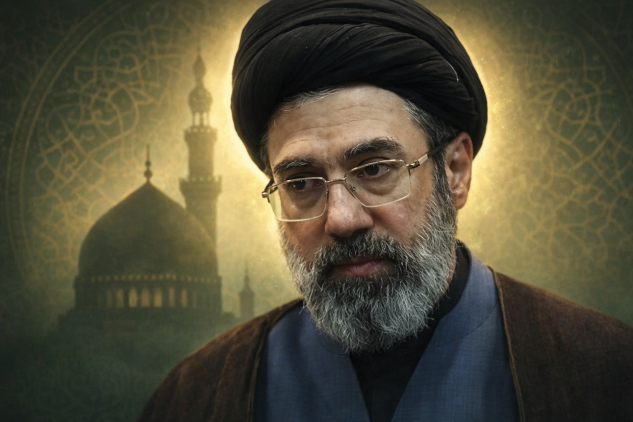
Strategic analysis does not have a column for grief. When the bombs hit the compound they did not take down a symbol. They killed his father. They killed his wife Zahra. They killed his teenage son Mohammad Bagher. They killed his sister Boshra and her fourteen-month-old daughter Zahra and his brother-in-law Mesbah. Thirty bombs on a residence. None of those people were soldiers. They were the people who passed him bread at the table and called him father and husband and son. Mojtaba Khamenei himself was pulled from the rubble with injuries to his legs, his hand, his arm. His mother survived. Ten days later, wounded and in hiding, he was named Supreme Leader of Iran. Washington called him unacceptable. Israel called him a target. The man now running the Islamic Republic watched American and Israeli bombs destroy his family, and is being told in the same breath that his own existence in that role will not be tolerated. Ideology is a cold engine. Grief is a hot one. Whatever comes next from Tehran, it will not be driven by strategy alone.
What a screw up by incompetents.
About the Author
 Robert Jennings is the co-publisher of InnerSelf.com, a platform dedicated to empowering individuals and fostering a more connected, equitable world. A veteran of the U.S. Marine Corps and the U.S. Army, Robert draws on his diverse life experiences, from working in real estate and construction to building InnerSelf with his wife, Marie T. Russell, to bring a practical, grounded perspective to life’s challenges. Founded in 1996, InnerSelf.com shares insights to help people make informed, meaningful choices for themselves and the planet. More than 30 years later, InnerSelf continues to inspire clarity and empowerment.
Creative Commons 4.0
This article is licensed under a Creative Commons Attribution-Share Alike 4.0 License. Attribute the author Robert Jennings, InnerSelf.com. Link back to the article This article originally appeared on InnerSelf.com
Recommended Books
The Guns of August by Barbara Tuchman
Barbara Tuchman's Pulitzer Prize-winning account of the first weeks of World War I remains the definitive study of how a single catastrophic miscalculation , the assumption that a war could be controlled , produced a catastrophe that reshaped the entire twentieth century.
Killing to Win by Max Abrahms
Political scientist Max Abrahms examines the strategic logic of targeted killing and finds that the empirical record consistently shows it fails to achieve its stated objectives, often strengthening the movements it targets by creating martyrs and generating new recruits.
Unthinkable by Kenneth Pollack
Former CIA analyst Kenneth Pollack provides a rigorous strategic assessment of the Iran nuclear question and the regional dynamics surrounding it, making the case that military options consistently produce worse outcomes than their proponents project and better alternatives exist.
Article Recap
The assassination of Iran's Supreme Leader risks triggering the same kind of cascading escalation that transforms localized conflicts into regional or global catastrophes, because the act attacks not just a political figure but the ideological and religious foundation of the Iranian state, activating the Shia martyrdom tradition in ways that historically unify populations rather than fracturing them. The strategic record of leadership assassination shows it consistently fails against ideological movements, and the precedent of targeting supreme leaders erodes the international norms that have prevented state-level political assassination from becoming standard geopolitical practice.
#IranConflict #SupremLeader #StrategicMistake #MartydomEffect #MiddleEast #EscalationRisk #GeopoliticsIran #AssassinationHistory #ShiaIslam