


In This Article
- Why Congress wants to stop the Fed from even studying CBDCs
- What individual accounts at the Federal Reserve could mean for you
- How this system would change the entire game of monetary policy
- Why Wall Street and big banks are terrified of losing control
- What a democratic money system might actually look like
The Real Revolution Coming in Money
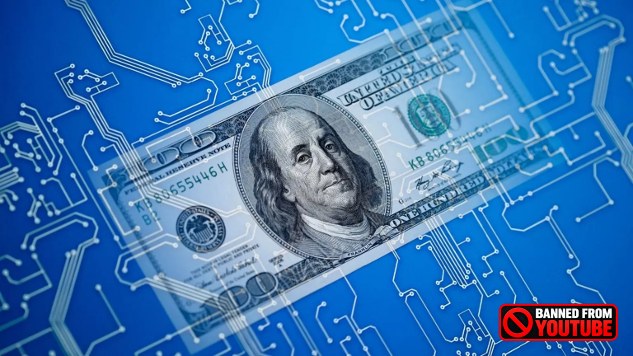
by Robert Jennings, InnerSelf.comWe now live in a country where political leaders are banning the study of ideas they dislike—not for safety or cost, but because the concept itself poses a threat to entrenched power. The U.S. House of Representatives recently passed a bill prohibiting the Federal Reserve from researching the idea of a Central Bank Digital Currency (CBDC). That’s not oversight—it’s enforced ignorance. What are they so afraid of? It’s not fraud. It’s not surveillance. It’s something far more dangerous: efficiency. Simplicity. Public benefit. In other words, a system that works too well to leave in the hands of private banks.
Paul Krugman addressed this in a recent article on his Substack, where he mocked the political theater surrounding CBDCs and pointed to Brazil’s highly successful Pix payment system as proof that government-run digital finance can work—and work well. But even Krugman didn’t drill into the root of the fear. The problem isn’t just that a CBDC might succeed. It’s that if ordinary people could hold accounts directly at the Fed—bypassing Wall Street’s toll booths—it would expose how unnecessary the whole system of private banking middlemen really is. That’s the quiet part no one wants to say out loud.
What If You Had a Bank Account at the Fed?
Let’s strip the jargon away. Today, commercial banks have accounts at the Federal Reserve. You don’t. Your money goes through private banks, which charge you fees, delay transfers, limit access, and reap profit from every step. But what if you had a digital account at the Fed? You could pay bills, receive payments, and hold your money safely—without the games, the gimmicks, or the grift. This system would eliminate unnecessary fees, reduce transfer delays, and provide a more secure way to manage your money.
It wouldn’t be crypto. It wouldn’t be speculative. It would be simple, stable, and backed by the full force of the U.S. government. This is not a fantasy—it’s just forbidden. Not by technology. Not by practicality. But by politics and profit.
The Power of Direct Money
When the Federal Reserve wants to stimulate the economy today, it lowers interest rates and hopes for the best. The hope is that commercial banks will lend more, invest more, and pass the benefits on to businesses and consumers. It’s a strategy built on faith—faith in private institutions to do the public’s work. However, history tells us that banks don’t always cooperate. Sometimes they hoard liquidity. Sometimes they lend recklessly. And sometimes they simply protect their own balance sheets. It's like giving the fire hose to the arsonist and hoping he puts the blaze out.
Now imagine a system where the Fed doesn’t have to beg, bribe, or hope. Imagine the central bank having the ability to act with surgical precision—injecting money directly into individual digital accounts held at the Fed. No third parties. No delays. If a natural disaster wipes out a region’s economy, the Fed could deliver funds to affected residents instantly. If the goal is to stimulate consumer spending during a downturn, it could credit every household’s Fed account with emergency funds overnight. And if inflation needs to be cooled, it could use digital tools to disincentivize spending through tiered interest mechanisms, again—directly. This is not a dream, it's a potential reality that could bring hope and optimism for a fairer and more efficient financial system.
With direct accounts at the Fed, the public finally becomes a direct participant in the monetary system. No more middlemen filtering what gets through. No more guesswork about whether a policy will trickle down. And perhaps most importantly, no more excuse for inaction when the tools to act are within reach. This is about fairness and equity, ensuring that everyone, not just a select few, benefits from the monetary system.
Why the Banks Are Panicking
This is the part no one wants to say out loud: banks make their money by controlling access to your money. They profit off delays, overdrafts, transfers, loans, and risks they create. If people had the option to keep funds in a public, secure, fee-free account at the Fed, millions would walk away from traditional banks. And the banks know it.
So, they’ve done what any threatened industry does in America—they’ve gone to Washington. Lobbied hard. Funded campaigns. And now they have Congress writing bills not to stop a CBDC, but to criminalize its study. That’s not oversight. That’s sabotage.
But... Surveillance?!
Let’s tackle the favorite scare tactic used to shut down meaningful debate: surveillance. Opponents of a digital dollar love to claim that giving people accounts at the Federal Reserve would open the floodgates to Orwellian tracking. But here’s the thing—they’re decades too late. The government already has the legal authority to subpoena your financial records. The IRS, FBI, and DEA have long been authorized to access banking data with proper cause. What protects us from abuse isn’t the lack of a digital system—it’s the legal guardrails we put in place: the Right to Financial Privacy Act, the Fourth Amendment, due process, and judicial oversight. Any Central Bank Digital Currency would operate under those same frameworks—if not stricter ones, given the political sensitivity of the issue. This system would be designed with robust security measures and strict privacy protections to ensure your financial data is safe and secure.
But let’s be honest: if surveillance is really your concern, the government isn’t your biggest problem. Today, the most invasive tracking doesn’t come from the Fed—it comes from Silicon Valley and Wall Street. Social media giants, ad-tech brokers, mobile apps, and telecom conglomerates track your location, habits, purchases, conversations, and even your moods—often in real time, often without your knowledge, and rarely with your meaningful consent. They do it because they can. And they can because our government has utterly failed to regulate them. If you’re scared of digital intrusion, start with the companies you actually gave your phone number, GPS location, and biometrics to—not the institution constitutionally bound by public accountability.
So no, banning a public digital currency isn’t a victory for privacy—it’s a victory for the private sector’s right to keep profiting from your data unchecked. The real threat isn’t the government watching too closely—it’s the government looking the other way while corporate surveillance becomes the norm. Blocking the Fed from offering digital accounts doesn’t protect your freedom. It just preserves the status quo: a rigged system where you're tracked, profiled, and monetized daily—with zero transparency, zero recourse, and zero public benefit. That’s not freedom. That’s negligence wearing a mask of patriotism.
What the World Is Already Doing
Brazil didn’t wait. They launched Pix, a government-run digital payments system, in 2020. It’s now used by nearly every adult in the country. Payments settle in seconds. Fees are practically nonexistent. Even the International Monetary Fund—usually no cheerleader for public programs—has praised its success.
The Bahamas launched a full retail Central Bank Digital Currency, known as the Sand Dollar. The UK, Sweden, and China are all running pilots. More than 130 countries are studying or deploying digital public money. Only in the United States is the conversation being shut down before it even starts.
This isn’t about payments. It’s about power. Who controls the creation of money? Who decides how fast it moves, who can access it, and who profits from its movement? Currently, that power is primarily held in private hands—by banks, payment processors, and card companies. A public digital account system would return a measure of that power to where it belongs: the people.
It’s not a radical idea. It’s the logical evolution of public infrastructure. Roads, electricity, education—these were once private luxuries too. Until the public decided they were too important to be left to private profiteers. Maybe it’s time we said the same about money itself.
What Are We Waiting For?
We have the technology. We have global examples. We have the need—just look at how clunky, expensive, and unequal our current financial system is. The only thing we don’t have is political courage. Because when money works for everyone, it stops working quite so well for the few who’ve been hoarding its privileges. A Fed-backed digital account for every citizen isn’t some radical sci-fi idea—it’s a modern public utility waiting to happen. But instead of building it, we’re watching our lawmakers outlaw the blueprints. That’s not conservatism. That’s sabotage.
And let’s not pretend this is some bipartisan failure of imagination. It’s primarily Republicans—especially when they hold power—who’ve become the anchor dragging America backward. While the rest of the world electrifies its cars, builds high-speed rail, modernizes infrastructure, and invests in public systems, the U.S. is busy handing tax breaks to billionaires who promptly move their profits offshore. We’re told we can’t afford better. Yet, there’s always room in the budget for corporate welfare, oil subsidies, and bloated defense contracts. Meanwhile, our trains derail, our bridges crumble, and our financial system still runs on 1970s machinery—with a 21st-century surveillance capitalism twist, of course.
So the next time someone tells you a Fed-backed account is dangerous, ask them: hazardous to whom? Because from where I’m sitting, the real danger is letting the world pass us by while we sacrifice progress on the altar of privilege. A public option for money isn’t something to fear—it’s something to demand.
Before the last bus leaves the station and we find ourselves standing alone in the rubble, wondering how we let Trump and Republicans dismantle America.
Recommended Book
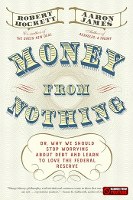 Money From Nothing: Or, Why We Should Stop Worrying About Debt and Learn to Love the Federal Reserve
by Robert Hockett (Author), Aaron James (Author)
Money From Nothing by Robert Hockett and Aaron James delivers a provocative and empowering rethinking of modern finance, revealing how government spending is not constrained like a household budget but created through the power of the Federal Reserve. Challenging fears around debt and inflation, the authors argue that public money can—and should—be used to build a fairer, more inclusive economy. With wit, clarity, and deep historical insight, this book reframes deficits as national investment tools and offers a bold, democratic vision for a people-centered financial system that works for all.
For more info and/or to order this book, click here. Available as either as a hardcover, audio book, or a Kindle edition.
jennings_bio
books_economy
Article Recap
Central bank accounts for individuals aren’t science fiction—they’re suppressed progress. By cutting out the middlemen and letting the public hold money at the source, we unlock faster, fairer, and more democratic monetary policy. The only thing stopping it is the fear of those who profit from inefficiency. If they’re afraid of the idea, maybe it’s time we demanded it.
#CentralBankAccounts #DigitalMoneySystem #PublicBanking #FedAccounts #CBDCPolicy #MonetaryReform #WallStreetFear #BankingPower #FedReform #EconomicJustice #DigitalDollar #FinancialInclusion