


In This Article
- What were the biggest falsehoods in Trump’s speech?
- How bad is the economic situation, really?
- Why do rural voters tolerate economic suffering under Trump?
- What will happen next with tariffs and inflation?
- Can democracy survive long enough for a fair election?
The Economy, Lies, and What Comes Next
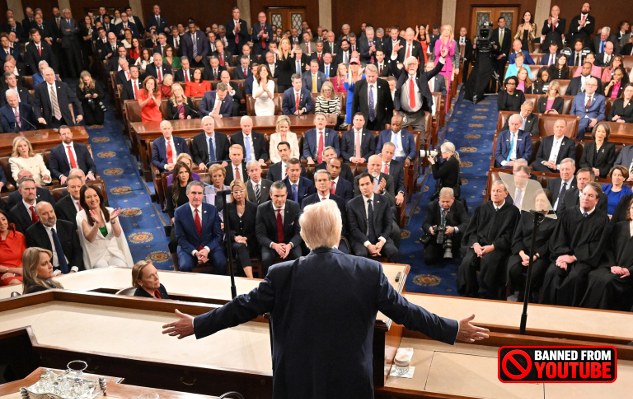
by Robert Jennings, InnerSelf.comTrump’s speech played fast and loose with reality, which is nothing new. But the sheer volume of misinformation, particularly on the economy, was staggering. Let’s break down a few of the most egregious claims:
He bragged about winning the popular vote by “big numbers,” despite the fact that his margin over Kamala Harris was razor-thin—just 1.5%, the smallest since 2000. And election results analysis is starting to show Trump only won by increased voter suppression tactics in Red States. He also claimed illegal border crossings were at an all-time low, which is flatly false. And of course, he took credit for a “booming” economy, despite warning signs of a downturn long before he took office.
But one of the biggest whoppers was his insistence that his tariffs would somehow strengthen the U.S. economy. The reality? They’re going to drive up prices on everything from groceries to cars, hurt American manufacturing, and strain trade relationships with allies like Canada and Mexico. Trump doesn’t seem to care—after all, economic hardship has only ever made his base cling to him more tightly.
The Reality of the US Economy: Trouble Was Already Coming
The Biden economy—hailed as the envy of the world—was propelled by two key factors: the post-pandemic economic rebound and the administration’s strategic investments in infrastructure, clean energy, and domestic manufacturing. The combination of pent-up consumer demand and historic public investment created a period of steady job growth, wage increases, and economic resilience that outperformed many peer nations.
But now, Trump is attempting to roll much of this back—often through legally dubious executive actions, including freezing funds already allocated by Congress and gutting key economic programs without legislative approval. By undoing these investments, his administration isn’t just dismantling Biden’s economic gains—it’s actively sabotaging the country’s future competitiveness, all while claiming the resulting downturn is someone else’s fault.
Even before Trump took office, the economy was showing signs of cooling. Consumer spending slowed, hiring flattened, and inflation remained a stubborn issue. But instead of addressing these problems, Trump’s administration is throwing gasoline on the fire.
The tariffs that just went into effect are a prime example. A 25% tax on Canadian and Mexican imports, along with a 10% tax hike on Chinese goods, is going to hit consumers hard. The cost of basic goods will rise, supply chains will be disrupted, and industries that rely on international trade will suffer. Meanwhile, government spending cuts are slashing jobs in the public sector, further dragging down economic momentum. Even if some of these are reduced, much damage to price increase anticipation will cause prices to rise.
And yet, despite these red flags, many Trump supporters—especially in rural America—are willing to endure the pain. Why?
Planned Cuts to Medicaid, Medicare, and Social Security
While Trump largely avoided discussing it in his speech, the budget plans coming out of his administration hint at major cuts to Medicaid, potential restructuring of Medicare, and reductions in Social Security Administration funding. And once again, the communities that will be hit the hardest are the rural voters who put him in office.
First, the proposed Medicaid reductions are a direct attack on rural hospitals and low-income residents. Over 60% of rural hospital patients rely on Medicaid for coverage. Slashing funding will push struggling hospitals into financial ruin, leading to closures that leave entire counties without access to healthcare. Urban and suburban areas can absorb hospital closures—rural America cannot. When a small-town hospital shuts down, residents are left driving hours for basic emergency care.
Next, there are the hints at Medicare cuts. While Trump has avoided outright declaring he’ll slash benefits, budget proposals suggest raising the eligibility age and increasing out-of-pocket costs. Rural seniors rely on Medicare more than their urban counterparts, since employer-sponsored health plans are less common in farming and blue-collar work. Any increase in costs will hit them hardest.
Then there’s the Social Security Administration. While Trump claims he won’t cut Social Security benefits, his administration is already reducing SSA funding, leading to fewer staff and slower processing times. This means delays in benefits, reduced customer service, and a bureaucratic nightmare for the elderly and disabled who depend on these checks to survive. Again, rural areas will bear the brunt of this—fewer SSA offices, fewer resources, and longer wait times.
It’s an ironic twist. The very voters who supported Trump in record numbers—older, rural Americans—are the ones who will be left to suffer the most under his policies.
Why Rural Voters Tolerate Economic Suffering
There’s a strange resilience among Trump’s most dedicated supporters when it comes to economic hardship. Time and time again, they’ve been willing to suffer financially as long as their cultural grievances are being validated.
Many have internalized the belief that struggling under Trump is somehow preferable to prosperity under Democrats. They see economic pain as a necessary sacrifice in the fight against “elites,” even when those same elites—Trump and Musk among them—are the ones engineering their suffering. Trump has successfully reframed hardship as proof of loyalty, turning economic struggle into a badge of honor.
But there’s a breaking point. As wages stagnate, as inflation eats away at savings, as tariffs drive up costs, even the most loyal supporters will eventually start asking questions. The problem is, by the time they do, the damage may already be irreversible.
What Happens Next?
The next few months are going to be a test of just how much economic pain Americans are willing to tolerate. Here’s what we can expect:
First, inflation will creep up as tariffs drive up the cost of imported goods. Basic necessities—food, clothing, appliances—will all get more expensive. The auto industry, already struggling with supply chain issues, will see prices soar as parts become more costly.
Second, job losses will continue. Trump’s government cuts are already eliminating thousands of federal positions, and private contractors that rely on government funding will feel the squeeze next. Meanwhile, companies that depend on trade with Canada, Mexico, and China will start shedding jobs as exports become more expensive and demand falls.
Third, financial markets will react. Investors aren’t blind to the economic impact of Trump’s policies. The more uncertainty his administration creates, the more volatile the markets will become. If consumer confidence continues to plummet, a recession becomes a real possibility.
And then there’s the political fallout. Will economic suffering finally be enough to weaken Trump’s grip? Or will his base, as they have before, double down and blame their struggles on immigrants, Democrats, or the media? History suggests that economic hardship alone won’t be enough to shake their loyalty—at least, not yet.
The Tipping Point
Trump’s speech was a masterclass in distraction, misdirection, and outright fabrication. But no matter how many times he spins the numbers, reality will catch up. The U.S. economy was already headed for a slowdown, and his policies are accelerating the decline. The only question left is: when will the suffering become too much to ignore?
For now, his base remains loyal. They’ll endure the rising prices, the job losses, and the market turmoil—until they can’t. And when that breaking point arrives, the reckoning will be unlike anything we’ve seen before.
In the aftermath of President Trump's recent address to Congress, discussions have intensified regarding potential reductions in Medicaid, as well as hints at cuts to Medicare and Social Security. Such measures could disproportionately affect rural communities, where reliance on these programs is often higher due to limited access to healthcare facilities and economic opportunities. Unlike urban and suburban areas, rural regions may lack the infrastructure and resources to absorb the impact of these cuts, leading to increased financial strain on individuals and local economies. This disparity raises concerns about widening the existing gap between rural and more populated areas, potentially exacerbating health and economic inequalities.
The real challenge isn’t exposing Trump’s lies—fact-checkers have been doing that for years. The challenge is making people care enough to act before it’s too late.
So buckle up. The next few months are going to be a brutal test of just how much hardship Americans are willing to take before they finally say: enough.
jennings_bio
books_economy
Article Recap
Trump’s speech was packed with misinformation, particularly on the economy, border security, and government spending. While his supporters may not feel the impact yet, his tariffs and budget cuts are setting the stage for an economic downturn. The question is—how long can the suffering be ignored before it breaks through the political haze?
#TrumpSpeech #FactCheck #USPolitics #Economy #Inflation #Tariffs #GOP #TrumpLies #Recession