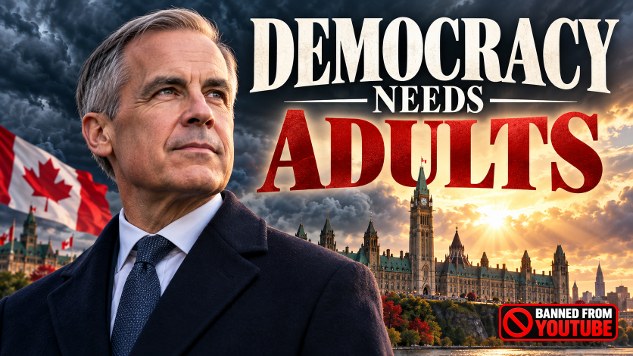
Mark Carney and the Kind of Leader Democracy Needs Right Now
Something unusual happened in Canadian politics recently. A central banker with no electoral history walked into one of democracy's rougher seasons and refused to pretend the...
Something unusual happened in Canadian politics recently. A central banker with no electoral history walked into one of democracy's rougher seasons and refused to pretend the...
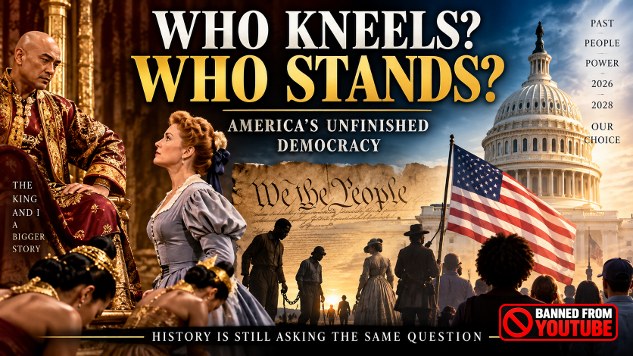
A familiar movie became a mirror. Watching The King and I again, something shifted, not in the film, but in the questions it started asking about power, kneeling, and who gets to...
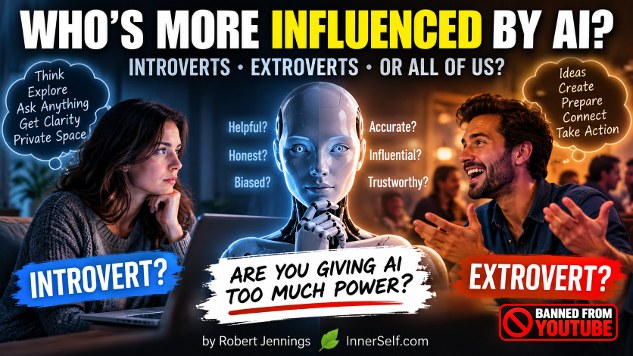
Can artificial intelligence figure out what kind of person you are simply from the way you talk to it? That question opens a far more unsettling one: can the patterns in your AI...

When love begins to unravel, do you walk away or pick up the thread? “Thread By Thread” is about two people discovering that sometimes love survives not through grand...

What if winning didn’t require someone else to lose? “Winners Together” imagines a world where success is shared, justice matters, and there is room for everyone to rise.
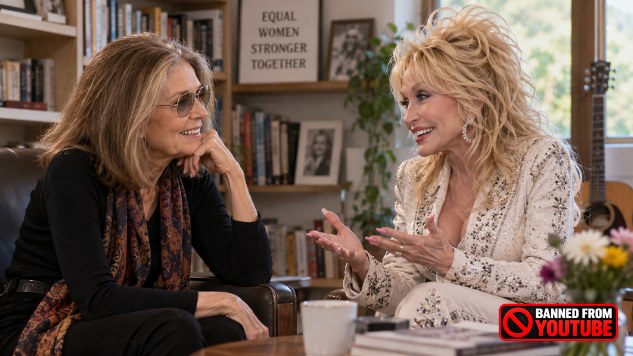
One burned her bra (metaphorically) and the other bedazzled hers. One marched on Washington and the other sang about a coat of many colors. And yet Gloria Steinem and Dolly...
Every morning is another chance to choose what stays with us and what we finally leave behind. “Born Again This Morning” is about discovering that a new beginning can be as...
Most of us have used AI as a smarter search engine, a faster typist, or a tireless explainer of things we half-understood. But something shifts when the AI stops being a stranger...

How much of yesterday are you still carrying today?
A familiar movie became a mirror. Watching The King and I again, something shifted, not in the film, but in the questions it started asking about power, kneeling, and who gets to...
Read more
Something unusual happened in Canadian politics recently. A central banker with no electoral history walked into one of democracy's rougher seasons and refused to pretend the...
Read more
The American welfare system was designed to support those in need, but it now faces significant challenges. Learn about its origins, current issues, and potential reforms,...
Read more
When love begins to unravel, do you walk away or pick up the thread? “Thread By Thread” is about two people discovering that sometimes love survives not through grand...
Read more
Somewhere in the back of my mind, a forgotten YouTube stranger planted a seed: AI didn't have to keep getting bigger. It took months of tinkering with small models on my own...
Read more
Peter Navarro has a Harvard Ph.D. in economics. Let that sink in. The same guy who helped launch a trade war with China by applying 19th-century thinking to a 21st-century economy was trained at one of the most prestigious institutions in the world. If that doesn't shake your faith in Ivy League credentials, it should. Because Navarro’s obsession with tariffs doesn’t just fail — it exposes how dangerously out of touch elite economic theory can be when it’s twisted into ideology.
When people start voting with their wallets, politicians take notice—eventually. But what happens when the wallet isn’t just closed, it’s pointed in another direction? With mounting global frustration at U.S. policies, more citizens worldwide are turning their backs on American-made goods and bypassing those glossy vacation brochures. The results? Far more consequential than the media lets on.

So, you’re lying in bed, brain spinning like a hamster on caffeine, wondering if that melatonin gummy you popped is a cure or just another con. Meanwhile, your phone’s lighting up your face like Times Square, and some podcast is whispering true crime into your subconscious. But hey, it’s “me time,” right? Welcome to the great sleep sabotage—modern edition.
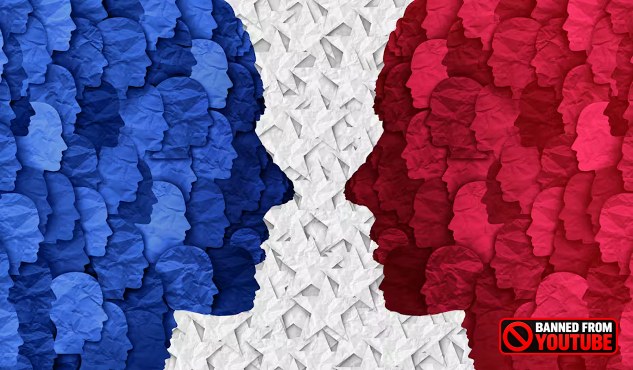
Ever wondered if you could guess a politician’s party just by listening to them speak? No, not by their policies or their promises—but by their word choice alone. Welcome to the strange but revealing world of politically conditioned variation, where even synonyms betray your party loyalty. Sounds ridiculous? Maybe. But the science says otherwise.

Forget the old saying “all politics is local.” In today’s America, all politics is relocation. A growing number of Americans are choosing to pack up, load the U-Haul, and move somewhere politically comforting—someplace where the neighbors won’t roll their eyes at the yard sign. Welcome to the era of partisan migration, where we vote not just with ballots, but with our feet—and those feet are walking straight into ideologically gated communities.
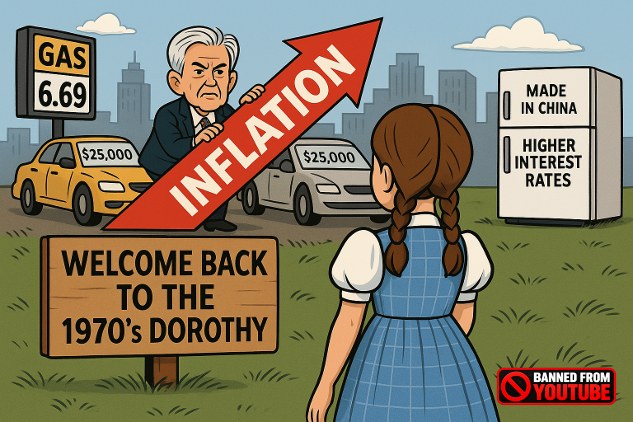
Remember the 1970s? Stagflation, gas lines, polyester leisure suits, and the unmistakable smell of economic dysfunction? Back then, it was foreign oil barons pulling the strings. This time, we’re not so lucky. The chaos isn’t coming from across the ocean — it’s being handcrafted in the Oval Office by the administration, thinking the best way to revive the economy is to drag it backward through a thicket of tariffs, trade wars, and broken supply chains. Welcome to 2025 — where inflation is rising, growth is shrinking, and yes, we’re doing it to ourselves.
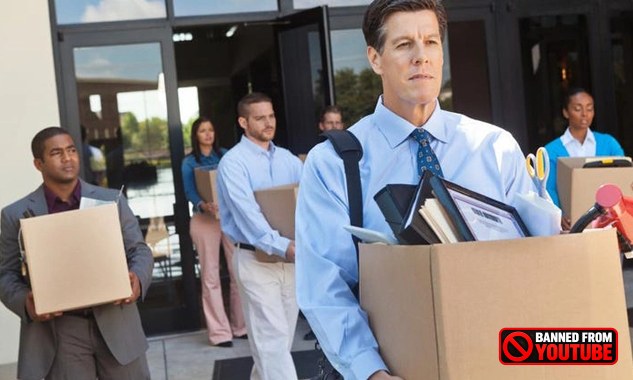
There’s a gut-punch feeling that comes with losing your job — especially when it’s not about performance, but politics. Right now, Trump’s warpath through the government workforce isn’t just an economic issue; it’s psychological warfare. People are being discarded, demoralized, and destabilized. This isn’t just about paychecks — it’s about dignity. Let’s talk about how to stay sane, stay strong, and maybe even come out better than before.

Veterans are among the sickest patients in America, yet the VA treats them more cost-effectively than private healthcare. Now, Trump and Musk's sweeping VA budget cuts threaten to upend that system—leaving 900,000 disability claims backlogged, 40,000 vets homeless, and suicides on the rise.

Spring is here again—and no, this isn't a commercial for allergy meds or lawn fertilizer. It’s nature’s way of waving a giant green flag that says, “You there—yes, you with the winter blues and excuses—this is your moment.” Forget January resolutions made under fluorescent gym lights and guilt trips. If you want real, lasting change, you need to sync your body and mind with something older, wiser, and a hell of a lot more consistent than human willpower: the seasons. Spring isn’t just a time to plant gardens—it’s the best shot you’ve got at planting change.

With the federal government pulls back on funding for disaster relief, healthcare, infrastructure, and law enforcement, states will scramble to fill the gap. But can they do it without raising taxes substantially? And if they do raise taxes, won’t the wealthy simply pack up and move to low-tax states, creating a bidding war for the lowest possible rates?

Resilience. It’s the golden child of self-help gurus, corporate boardrooms, and government austerity policies. We hear it everywhere: "Be resilient!"—as if it's some magic formula for success. But what if resilience isn’t always a good thing? What if, instead of bouncing back, young people are pushing back? And what if that’s the real resilience we should be paying attention to?

Trump’s economic policies are built on fantasy, and the price of those delusions will be paid by working Americans. While he distracts his supporters with talk of tariffs, tax cuts, and “bringing back” manufacturing, the real economic crisis is looming: climate-driven collapse. Instead of preparing for the challenges of the 21st century, he’s doubling down on a failed 1950s economic model. But there’s another way—a strategy that actually works. If I were king, we’d launch a WWII-style economic mobilization, one that actually makes America stronger instead of weaker.
We all have mental habits we don’t question—thought patterns that feel natural but might be quietly holding us back. What if the way you think is limiting your success without you even realizing it? What if your brain is keeping you trapped in a cycle of stubborn certainty, filtering out new ideas before they even have a chance? The good news? You can break free—once you know what to look for.

Sleep is one of the most overlooked pillars of mental health. We glorify hustle culture, praise early risers, and treat sleep deprivation like a badge of honor. But what if I told you that your lack of sleep isn’t just making you tired—it’s actively damaging your ability to think, process emotions, and stay sane? In fact, chronic sleep deprivation might be one of the biggest unspoken mental health crises of our time.

After reading a New York Times article on managing hypoglycemia in seniors, I couldn’t help but shake my head. It pushes quick sugar fixes—juice, glucose tablets, candy bars—like some kind of medical whack-a-mole. Sure, that might work in an emergency, but as a long-term strategy, it’s a disaster. This isn’t just about seniors; it’s a lifelong problem fueled by a food industry pushing ultra-processed carbs from childhood. Now, in old age, people are told to double down on the very cycle that got them here?

The United States has tried isolationism before, and every single time, it has been a disaster. Now, as Trump pushes to dismantle NATO and cut ties with Ukraine, history is once again knocking at the door—this time with hypersonic missiles and cyber warfare in tow. The idea that America can just step back from global leadership without consequences isn’t just naive—it’s an open invitation for adversaries to reshape the world in their favor.

The United States is no longer just experiencing political turmoil—it’s undergoing a Silicon Valley-style hostile takeover. With mass firings, deregulation, and the erosion of legal accountability, Trump and his allies are applying the "move fast and break things" approach to governance. The question is: What happens when the U.S. government itself collapses?
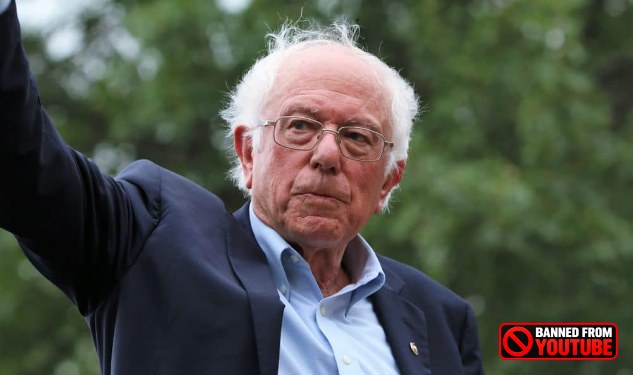
Trump’s State of the Union address was exactly what we’ve come to expect—an avalanche of deception, theatrics, and outright lies. But Bernie Sanders wasn’t having it. In a scathing response, he dismantled Trump’s biggest fabrications, exposing how they serve the billionaire class while ignoring the struggles of ordinary Americans. If you were waiting for someone to call out the charade, Bernie delivered. Let’s break it down.
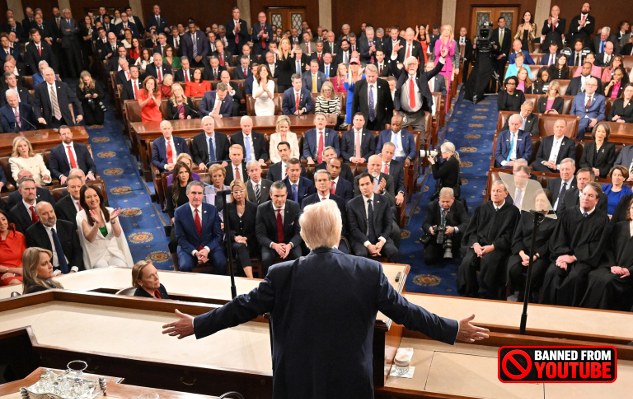
Donald Trump’s latest address to Congress was everything we’ve come to expect—long, rambling, and full of misleading claims. But what’s more concerning is not just the falsehoods, but the economic storm brewing underneath them. While his supporters cheer on the rhetoric, the real economy is shifting in ways that will hit them hardest. With tariffs taking effect, inflation creeping up, and government cuts slashing through key programs, the next few months could be a wake-up call. The question is—how long before they feel enough pain?
As we navigate the turbulent waters of our current era, it's evident that we're amidst what historians Neil Howe and William Strauss describe as the Fourth Turning—a period marked by crisis and transformation. The rise of Trumpism has acted as a catalyst, exposing deep-seated fractures within our institutions, economy, and collective psyche. This moment demands not only reflection but decisive action. Will we nurture the seeds of renewal, or allow the weeds of division and decay to overrun our societal garden?
Page 9 of 18
When love begins to unravel, do you walk away or pick up the thread? “Thread By Thread” is about two people discovering that sometimes love survives not through grand...
Read more
What if winning didn’t require someone else to lose? “Winners Together” imagines a world where success is shared, justice matters, and there is room for everyone to rise.
Read more
In a world of swipes, matches, texts and disappearing conversations, sometimes the most radical thing we can offer another person is simple kindness.
Read more
Some temptations don't announce themselves as trouble. They arrive softly, offering comfort, pleasure and the promise that just a little more won't hurt.
Read more
How much of yesterday are you still carrying today?
Read more