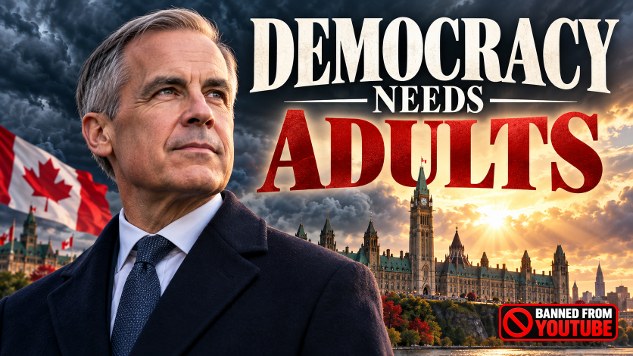
Mark Carney and the Kind of Leader Democracy Needs Right Now
Something unusual happened in Canadian politics recently. A central banker with no electoral history walked into one of democracy's rougher seasons and refused to pretend the...
Something unusual happened in Canadian politics recently. A central banker with no electoral history walked into one of democracy's rougher seasons and refused to pretend the...

A familiar movie became a mirror. Watching The King and I again, something shifted, not in the film, but in the questions it started asking about power, kneeling, and who gets to...

Can artificial intelligence figure out what kind of person you are simply from the way you talk to it? That question opens a far more unsettling one: can the patterns in your AI...

When love begins to unravel, do you walk away or pick up the thread? “Thread By Thread” is about two people discovering that sometimes love survives not through grand...

What if winning didn’t require someone else to lose? “Winners Together” imagines a world where success is shared, justice matters, and there is room for everyone to rise.

One burned her bra (metaphorically) and the other bedazzled hers. One marched on Washington and the other sang about a coat of many colors. And yet Gloria Steinem and Dolly...

Every morning is another chance to choose what stays with us and what we finally leave behind. “Born Again This Morning” is about discovering that a new beginning can be as...
Most of us have used AI as a smarter search engine, a faster typist, or a tireless explainer of things we half-understood. But something shifts when the AI stops being a stranger...

How much of yesterday are you still carrying today?
A familiar movie became a mirror. Watching The King and I again, something shifted, not in the film, but in the questions it started asking about power, kneeling, and who gets to...
Read more
Something unusual happened in Canadian politics recently. A central banker with no electoral history walked into one of democracy's rougher seasons and refused to pretend the...
Read more
The American welfare system was designed to support those in need, but it now faces significant challenges. Learn about its origins, current issues, and potential reforms,...
Read more
When love begins to unravel, do you walk away or pick up the thread? “Thread By Thread” is about two people discovering that sometimes love survives not through grand...
Read more
Somewhere in the back of my mind, a forgotten YouTube stranger planted a seed: AI didn't have to keep getting bigger. It took months of tinkering with small models on my own...
Read more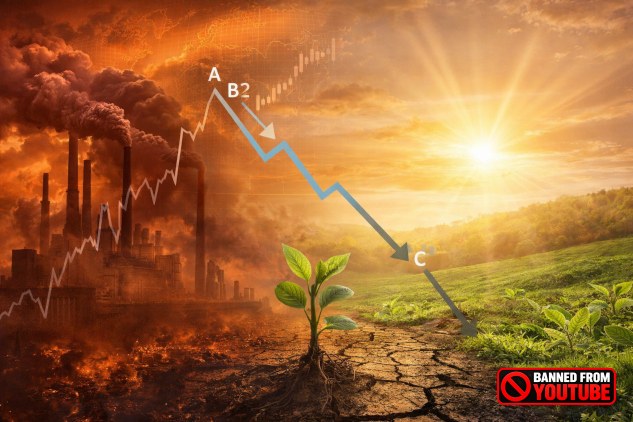
Most market analysts are asking the wrong question. They're debating whether we're in a bubble, scanning charts for the next 10% correction, arguing over Fed policy like it's the only variable that matters. Meanwhile, they're missing what might be the biggest structural shift since the steam engine changed everything. If this market peak is what it looks like, we're not just watching another bull market die. We're watching the slow-motion end of a 250-year experiment in pretending Earth's limits don't exist.

Some nights aren’t meant to be fixed. Gloria Travers delivers a powerful modern folk performance about acceptance, emotional rest, and letting moments endure instead of forcing healing.

A cowboy philosopher who died in 1935 understood American politics better than most living analysts. Will Rogers wielded humor as surgery, not entertainment—cutting through corruption without killing hope. His political wisdom survived the Great Depression, multiple wars, and technological revolutions because he spoke to something deeper than ideology. In an age of manufactured outrage and tribal warfare, Will Rogers offers what we've lost: clarity without cruelty, skepticism without despair, and patriotism that tells the truth.

They keep asking if the machine is really intelligent. Meanwhile, the machine already solved the problem, suggested three experiments, and found a paper written in German that nobody knew existed. But sure, let's have another philosophical debate about whether it truly "understands" what it's doing.

When inflammation persists despite eating reasonably well and tests showing "mostly normal" results, the problem often isn't a specific food but how your body handles sugar, starch, and insulin. Insulin resistance and liver stress create a cascade of inflammation that standard approaches miss entirely. Understanding this metabolic pattern reveals why conventional anti-inflammatory advice sometimes fails and what actually works to reduce inflammation at its source.
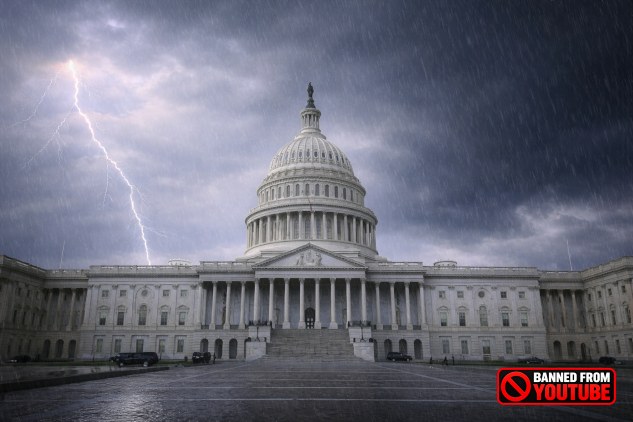
Presidential failure isn't an abstraction anymore—it's reshaping global power in real time while most Americans sleep through the alarm. As erratic leadership threatens allies and violates basic norms, countries worldwide are activating backup plans they built specifically for this moment. The siege America faces doesn't come from foreign armies. It comes from within: adolescent impulse meeting superpower capability while adversaries exploit the chaos with surgical precision.

When an Immigration and Customs Enforcement agent shot and killed Renee Nicole Good in Minneapolis on January 7, 2026, the Department of Justice had exactly one job: investigate whether a federal officer violated someone's constitutional rights. They chose silence instead. Not confusion. Not delay. Silence. That silence isn't bureaucratic incompetence—it's institutional abandonment of the one mechanism designed to prevent state violence from becoming state policy. History has seen this movie before, and it doesn't end with apologies.

You're working. Maybe two jobs. Maybe your spouse works too. You budget. You plan. You cut back. And still, by the end of the month, the numbers don't add up. Rent takes half your income. Groceries cost twenty percent more than last year. Your kid needs braces. The car needs fixing. Health insurance went up again. You're doing everything right, and you're still falling behind.
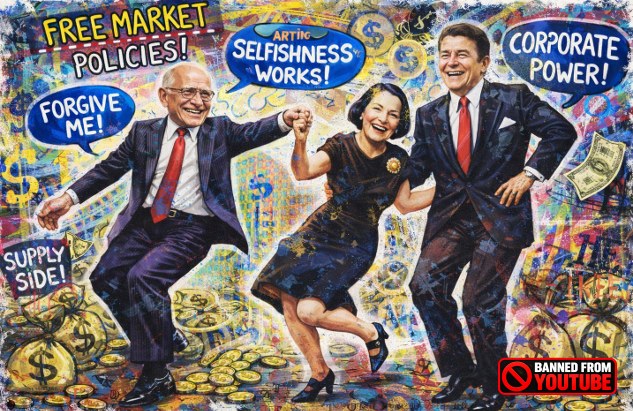
What's happening to independent publishers didn't start with Google. It didn't start with algorithms or AI or any particular piece of technology. It started in the 1980s when two deliberate policy changes rewired how American corporations operate. One killed the rules that kept monopolies from forming. The other changed how executives get paid. Together, they turned extraction into the most profitable corporate strategy in nearly every industry. Understanding this explains why airlines, banks, food companies, and tech platforms all consolidated the same way—and why forty years of both parties did nothing to stop it.

Something feels off. Not catastrophically wrong—just persistently, exhaustingly not right. You work harder but get less. You follow the rules but fall further behind. You adapt and optimize and hustle, and the gap between effort and security just keeps widening. You're not imagining it. And it's not your fault.

We have been sold a flimsy, pastel-colored version of optimism. Smile more. Think happy thoughts. Pretend the smoke alarm is just background noise. That version deserves the skepticism it gets. But here is the twist most people miss: real optimism is not denial. It is not cheerfulness. It is not pretending the house is not on fire. Real optimism is a practical survival tool, and the evidence shows it helps people live longer. Not because they feel better, but because they respond differently to reality.

Somewhere between the first string of Christmas lights and the third reminder to “be joyful,” winter sneaks up and pulls the plug on our emotional power grid. The days get shorter. The nights stretch longer. And suddenly, Christmas, that annual festival of forced cheer, feels less like a celebration and more like a performance review you never asked for. If you are feeling the winter blues or wrestling with holiday depression, congratulations. You are not broken. You are paying attention.

PFAS infants are becoming an invisible casualty of toxic water contamination. New research shows that everyday drinking water can quietly increase infant mortality, extreme prematurity, and low birth weight. This article looks beyond the headlines to explore how toxic water affects the most vulnerable, why many families never knew they were exposed, and what this moment reveals about responsibility, protection, and long-term well-being.

Women folk healers were branded as witches, yet much of their work was early community medicine grounded in observation, relationship, and nature. Their suppression helped turn health from a shared practice into a gated profession. Today, Indigenous wisdom and modern science point in the same direction again. If we want longer, better lives, we must become proactive stewards of balance rather than passive recipients of treatments.

Tariff impact on Chinese EVs is more than a trade skirmish; it’s a direct hit on consumers. By driving up costs and limiting affordable EV options, tariffs delay the clean energy transition and protect industry at the expense of everyday families. The truth is simple: Chinese EVs could have brought affordable mobility, but tariffs lock consumers into higher prices and fewer choices.

We keep changing the clock and wonder why our bodies feel out of step. The truth is simple. Your brain runs on light, not policy. When we chase later sunsets or pretend dawn arrives on command, sleep weakens, mood drops, and attention frays. The good news is we can restore balance by living closer to natural time and making small daily choices that support circadian health.

Physicians and stressed-out city dwellers are embracing a simple practice with ancient roots called forest bathing. It is not hiking and it is not a fitness trend. It is the quiet art of letting the woods recalibrate your nervous system. The payoff is practical and personal. Lower stress. Better sleep. Clearer thinking. A steadier mood. You do not need gear or perfection. You only need trees and time.

Stand at the front door of any big supermarket and play a little game. Count the aisles of boxes and bags, then try to find the small strip of real food that depends on insects. If bees and their wild cousins keep fading, that strip shrinks and prices rise. This is not just about pretty butterflies. It is about dinner, health, and who gets left out when the bill comes due.

Target’s decision to cut 1,800 corporate roles lands like a starting gun, not a finish line. After years of pilots and promises, AI is finally crossing the office threshold and rearranging who does the work, how fast decisions get made, and which jobs even exist. This isn’t about store cashiers or warehouse robots. It’s the middle of the corporate chart, the people who translate numbers into action, that now sits squarely in the path of automation.

The number is 423.9. That’s the current concentration of carbon dioxide in the atmosphere—423.9 parts per million. On paper, it looks like a statistic. In reality, it’s a verdict. It says the planet isn’t broken. The system that runs it is.
Page 4 of 18
When love begins to unravel, do you walk away or pick up the thread? “Thread By Thread” is about two people discovering that sometimes love survives not through grand...
Read more
What if winning didn’t require someone else to lose? “Winners Together” imagines a world where success is shared, justice matters, and there is room for everyone to rise.
Read more
In a world of swipes, matches, texts and disappearing conversations, sometimes the most radical thing we can offer another person is simple kindness.
Read more
Some temptations don't announce themselves as trouble. They arrive softly, offering comfort, pleasure and the promise that just a little more won't hurt.
Read more
How much of yesterday are you still carrying today?
Read more