Mark Carney and the Kind of Leader Democracy Needs Right Now
Something unusual happened in Canadian politics recently. A central banker with no electoral history walked into one of democracy's rougher seasons and refused to pretend the...
Something unusual happened in Canadian politics recently. A central banker with no electoral history walked into one of democracy's rougher seasons and refused to pretend the...
A familiar movie became a mirror. Watching The King and I again, something shifted, not in the film, but in the questions it started asking about power, kneeling, and who gets to...
Can artificial intelligence figure out what kind of person you are simply from the way you talk to it? That question opens a far more unsettling one: can the patterns in your AI...
When love begins to unravel, do you walk away or pick up the thread? “Thread By Thread” is about two people discovering that sometimes love survives not through grand...

What if winning didn’t require someone else to lose? “Winners Together” imagines a world where success is shared, justice matters, and there is room for everyone to rise.
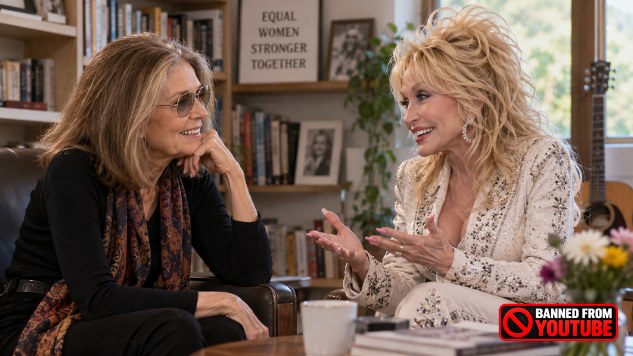
One burned her bra (metaphorically) and the other bedazzled hers. One marched on Washington and the other sang about a coat of many colors. And yet Gloria Steinem and Dolly...
Every morning is another chance to choose what stays with us and what we finally leave behind. “Born Again This Morning” is about discovering that a new beginning can be as...
Most of us have used AI as a smarter search engine, a faster typist, or a tireless explainer of things we half-understood. But something shifts when the AI stops being a stranger...

How much of yesterday are you still carrying today?
A familiar movie became a mirror. Watching The King and I again, something shifted, not in the film, but in the questions it started asking about power, kneeling, and who gets to...
Read more
Something unusual happened in Canadian politics recently. A central banker with no electoral history walked into one of democracy's rougher seasons and refused to pretend the...
Read more
The American welfare system was designed to support those in need, but it now faces significant challenges. Learn about its origins, current issues, and potential reforms,...
Read more
When love begins to unravel, do you walk away or pick up the thread? “Thread By Thread” is about two people discovering that sometimes love survives not through grand...
Read more
Somewhere in the back of my mind, a forgotten YouTube stranger planted a seed: AI didn't have to keep getting bigger. It took months of tinkering with small models on my own...
Read more 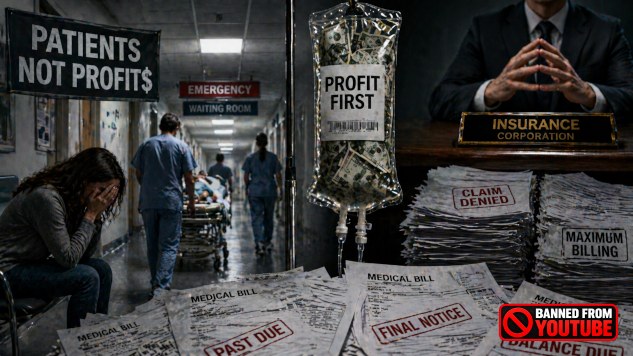
America spends more on health care than any other nation, yet the costs keep soaring and too many people still lose hope. The $2 trillion question is not simply about money, it’s about the choices we make when suffering becomes a commodity.
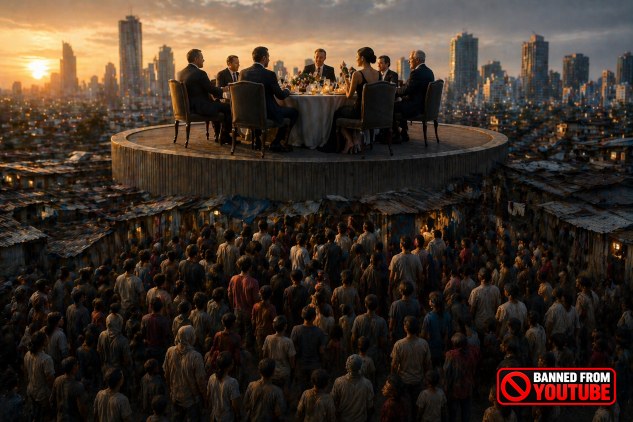
Sixty thousand human beings now control more wealth than the bottom half of humanity combined. That's fewer people than fill a football stadium holding more financial power than four billion souls.

Wall Street hit a record high on Friday morning because a foreign minister in Tehran posted on X. That is the whole story in one sentence. The rest of this article is what that sentence actually means, and why it means a great deal more than the Dow is telling you.

America spent $50 trillion on wars it lost while China built the future. The pattern is older than either nation. Rome fell this way too. Roosevelt knew the alternative. We chose the machine instead.
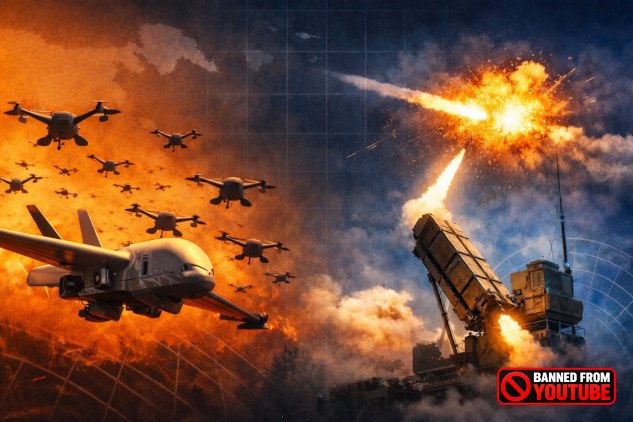
A veteran who read NATO's real nuclear war plans at the Fulda Gap sees a familiar pattern in the Iran war — and it's worse than what's being reported. The $20,000 drone has broken Israel's defense math. Interceptor stocks are dwindling. The escalation ladder is losing its middle rungs. And the nuclear risk is no longer abstract — it is becoming structurally plausible under continued escalation. What happens next doesn't stay in the Middle East. It reaches your wallet before the smoke clears.

Most people confuse self-concept with self-esteem. Self-esteem is how you feel on a given day. Self-concept is the deeper architecture, the "I am" beliefs that silently govern every decision you make. Your self-image wasn't invented by you. It was built from other people's reactions, early labels, and survival strategies that made sense at the time. Understanding where your self-concept came from is the first step toward rewriting it.

Hannah Arendt went to Jerusalem in 1961 expecting to see a monster. What she found was a bureaucrat who was very good at his job. That gap between what she expected and what she saw produced one of the most important — and most uncomfortable — ideas of the 20th century. And we have spent sixty years doing our level best to ignore it.
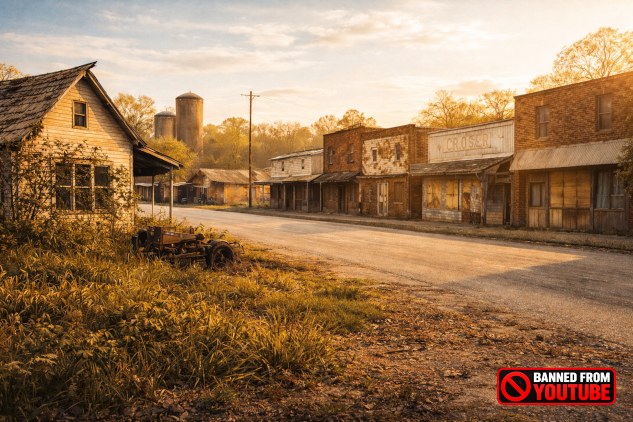
Rural America is losing its hospitals, its affordable housing, its farms, and its schools , not because of immigrants, not because of urban elites, and not because of woke ideology. It is losing them because of specific budget votes cast by specific legislators who then turn on Fox News and Newsmax to make sure you are angry at someone else before you can do the math. Fox News's own lawyers argued in federal court that their audience does not expect factual accuracy from their hosts. That entertainment product, engineered to generate outrage, is the single most important political force in rural America today. And it is working perfectly.

A three-hundred-dollar solar panel that plugs into a wall outlet can begin cutting your electricity bill the same afternoon you unbox it. No permit. No installer. No roof work. More than a million of these systems are already running in Germany, sold in supermarkets alongside kitchen appliances. In the United States, the same technology is running into a wall of utility regulations that were designed for a different era — and the collision tells you everything about who really controls your electricity.
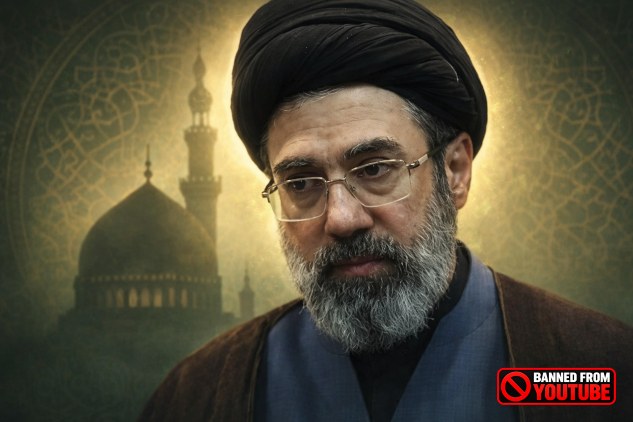
On June 28, 1914, a nineteen-year-old with a pistol shot Archduke Franz Ferdinand in Sarajevo. Six weeks later, the world was at war. The assassination did not cause the war by itself. The global system was already under stress , militarized alliances, imperial rivalries, wounded nationalisms all coiled together like a spring. The bullet was just the release mechanism. When the United States and Israel killed Iran's Supreme Leader, they may have pulled a trigger in a world that is, once again, already coiled.

American warplanes have destroyed more than five thousand targets inside Iran. The Strait of Hormuz remains effectively closed. Oil is trading near two hundred dollars a barrel. And the administration in Washington is searching for a way to call this a victory. The Hormuz Vise is not a war the United States is losing in the traditional sense. It is a war that cannot be won the way Washington imagined it would be won, and the bill is arriving at every gas pump in America.
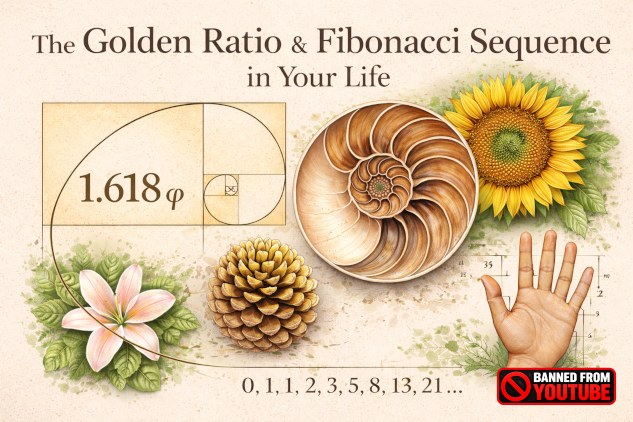
You've probably heard the term "golden ratio" tossed around in art, design, and biology—usually with some breathless talk about perfection and divine proportion. But here's the thing: there's real substance underneath the hype. The golden mean and Fibonacci numbers aren't mystical secrets or proof that the universe was mathematically designed. They're patterns of efficiency that nature stumbled into because they work. And understanding them can actually change how you see your life, your growth, and your decisions.

Everything that exists — the coral reef, the human body, the stable climate that made civilization possible — exists because of its limits. Not despite them. Because of them. That one idea, if you sit with it long enough, changes everything you think you know about growth, freedom, and what we've been doing to this planet for ten thousand years.

At 81, I have watched the country I put on a uniform for at 17 drift toward the very thing I was trained to fight. I have sounded this alarm for 26 years. I have felt dismissed, abandoned, and exhausted. And still my soul will not let me quit. This is not nostalgia. This is reconnaissance. And what I am seeing on the ground right now is the most serious threat to American democracy in my lifetime.

Carl Rogers understood that inner authority—trust in your own experience—gets systematically replaced by external validation systems. Modern institutions don't need overt control when people have learned to doubt themselves, seek constant approval, and outsource judgment to credentials and consensus. Rogers explained how conditional acceptance trains compliance, why authenticity threatens power structures, and what happens when entire populations stop trusting their own perceptions. The most complete control is the kind people enforce on themselves while believing they're free.
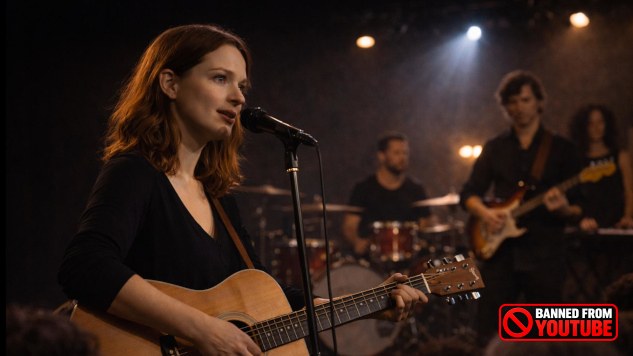
A city once named among the happiest in the world faces pressure, confrontation, and resilience. Sung by Gloria Travers and The North Street Band, this cinematic protest song tells a story of home and unity.
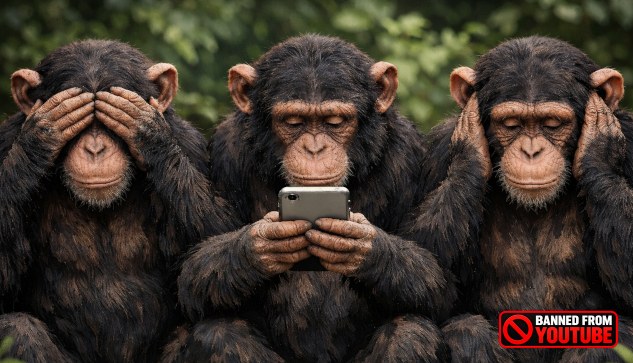
Picture the famous three wise monkeys, but instead of covering their eyes, ears, and mouth, one is staring into a glowing screen. We've traded the ancient wisdom of "see no evil, hear no evil, speak no evil" for something far more troubling: we've chosen to see, hear, and speak only what our devices show us.
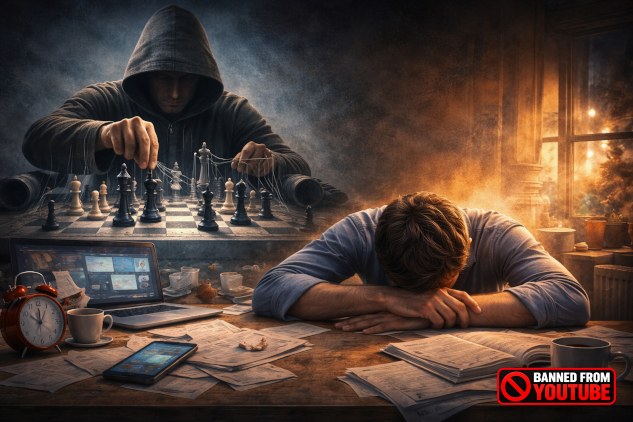
Sun Tzu understood that strategic power operates best when it's invisible—winning without fighting, controlling without coercion, defeating opponents who never realize they're in a battle. His work wasn't about military conquest but about perception, positioning, and psychological advantage.
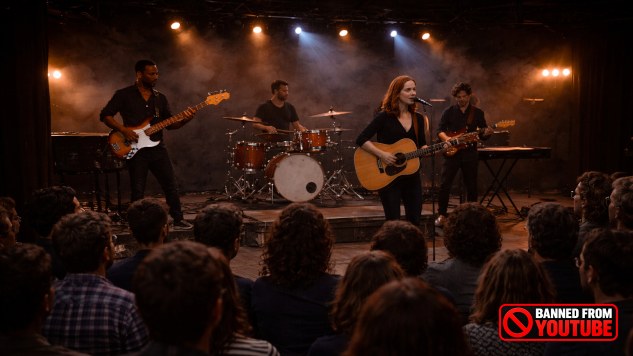
A raw, emotional song about burnout, escape, and finding comfort when the world feels too heavy. Gloria Travers and The North Street Band capture the quiet moments when retreat becomes survival.
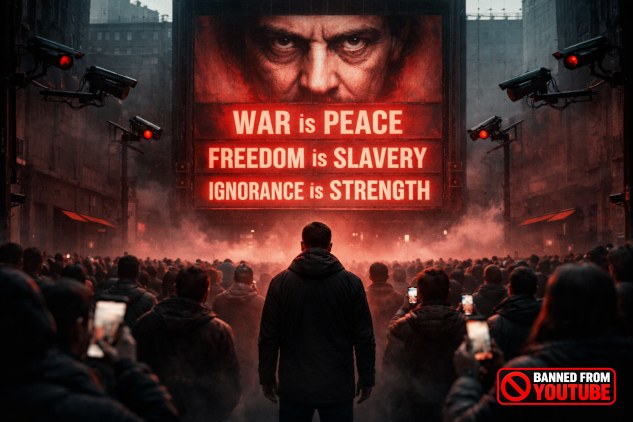
George Orwell documented how political control works through language manipulation, surveillance normalization, and the corruption of truth. His analysis was dismissed as dystopian fiction, yet modern institutions operate exactly as he described. Orwell understood that power doesn't need to convince people—it just needs to confuse them long enough that clarity becomes dangerous. We've crossed from reading Orwell as warning to experiencing him as instruction manual. The question is whether we notice before noticing becomes impossible.
Page 3 of 18
When love begins to unravel, do you walk away or pick up the thread? “Thread By Thread” is about two people discovering that sometimes love survives not through grand...
Read more
What if winning didn’t require someone else to lose? “Winners Together” imagines a world where success is shared, justice matters, and there is room for everyone to rise.
Read more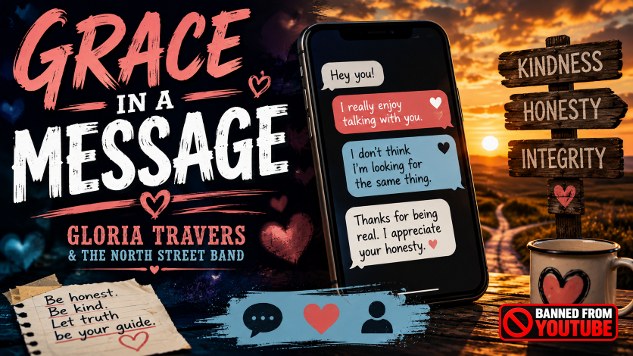
In a world of swipes, matches, texts and disappearing conversations, sometimes the most radical thing we can offer another person is simple kindness.
Read more
Some temptations don't announce themselves as trouble. They arrive softly, offering comfort, pleasure and the promise that just a little more won't hurt.
Read more
How much of yesterday are you still carrying today?
Read more